


What if the real key to firmer, fuller erections wasn’t just about blood flow or hormones, but something deeper, quieter, and often overlooked?
Here’s what most men never learn: your penis, like every other part of your body, is wrapped in fascia. This thin but powerful layer of connective tissue surrounds the erectile chambers, blood vessels, and nerves. It holds shape, guides expansion, and plays a major role in your capacity for fullness, length, and sensation.
We talk a lot about vascular health, testosterone, and pelvic floor strength when it comes to sexual performance. But there’s another layer of your body that’s just as crucial: your fascia. When it’s functioning well, fascia helps everything move, expand, and respond with ease.
But when it’s restricted? It can quietly choke off blood flow, reduce sensation, limit expansion, and even make your penis appear shorter or less responsive than it truly is.
This article will help you understand what fascia is, how it affects erection quality and perceived size, and what you can do to restore its function and unlock more of your body’s natural potential.
Because your erections don’t just depend on what’s inside, they depend on the space around them, too.
What Is Fascia, Really?
Fascia is the body’s scaffolding system, a thin but strong connective tissue that wraps around muscles, nerves, and organs like a spider web. It’s elastic, responsive, and incredibly sensitive to tension, hydration, and movement.
Healthy fascia is smooth, flexible, and allows tissues to glide against each other. Restricted fascia becomes sticky, stiff, or bound up, often in response to inflammation, injury, stress, or underuse.
In your genitals, fascia plays a critical role in:
- Allowing blood vessels and erectile tissue to expand fully
- Supporting nerve endings that contribute to pleasure and sensitivity
- Maintaining the shape, positioning, and freedom of movement of the penis
When fascia becomes restricted, you may not notice it immediately. But over time, you might experience:
- Erections that feel weaker or shorter
- Loss of sensitivity or sensation
- A penis that doesn’t seem to expand as fully as it used to
- Tightness or pulling in the base, perineum, or pubic area
Fascia and Perceived Penis Size
Here’s something most men don’t know: You may be longer than you look.
Restricted fascia, particularly at the base of the penis or in the suspensory ligaments, can limit the visible portion of the shaft. It can also restrict expansion by constraining the erectile chambers. This creates the sensation-and visual effect-of a smaller or less responsive penis, even if structurally, nothing is wrong.
Improving fascial health can literally give you back room to grow.
When the fascia is hydrated, relaxed, and supple, blood flows more easily. Tissue expands more fully. Nerves communicate more clearly. Sensation returns. And the penis can express more of its natural length and girth.
What Affects Fascial Health in the Pelvis and Penis?
Fascia is highly responsive to your environment, your movement patterns, and your stress levels. Here are some common contributors to fascial restriction in the pelvic region:
- Chronic sitting: Restricts circulation and creates fascial compression in the perineum and hips
- Inadequate movement: Fascia thrives on motion; lack of variety leads to stiffness
- Dehydration: Fascia needs hydration to glide and slide properly
- Tension and trauma: Emotional stress, especially around sexuality, can create holding patterns in the tissue
- Overtraining or overstimulation: Too much pressure or repetitive stimulation can cause micro-contractions that bind tissue
Understanding this means your recovery tools, like warm baths, stretching, breathing, and myofascial release, matter just as much as your workouts.
How to Support Healthy, Responsive Fascia
Improving fascial health is about restoring fluidity, elasticity, and freedom of movement. Here’s where to start:
- Hydrate consistently: Fascia needs water to function, drink enough throughout the day
- Move more diversely: Include mobility exercises, yoga, and walking in your routine
- Stretch your hips and pelvis: Gentle daily stretching can release bound-up fascia in the groin and base
- Use heat and breath: Warmth softens tissue; slow breathing calms the nervous system and reduces tension
- Explore myofascial release: Self-massage, foam rolling, or working with a trained therapist can break up adhesions
Hydrotherapy for Fascia and Function
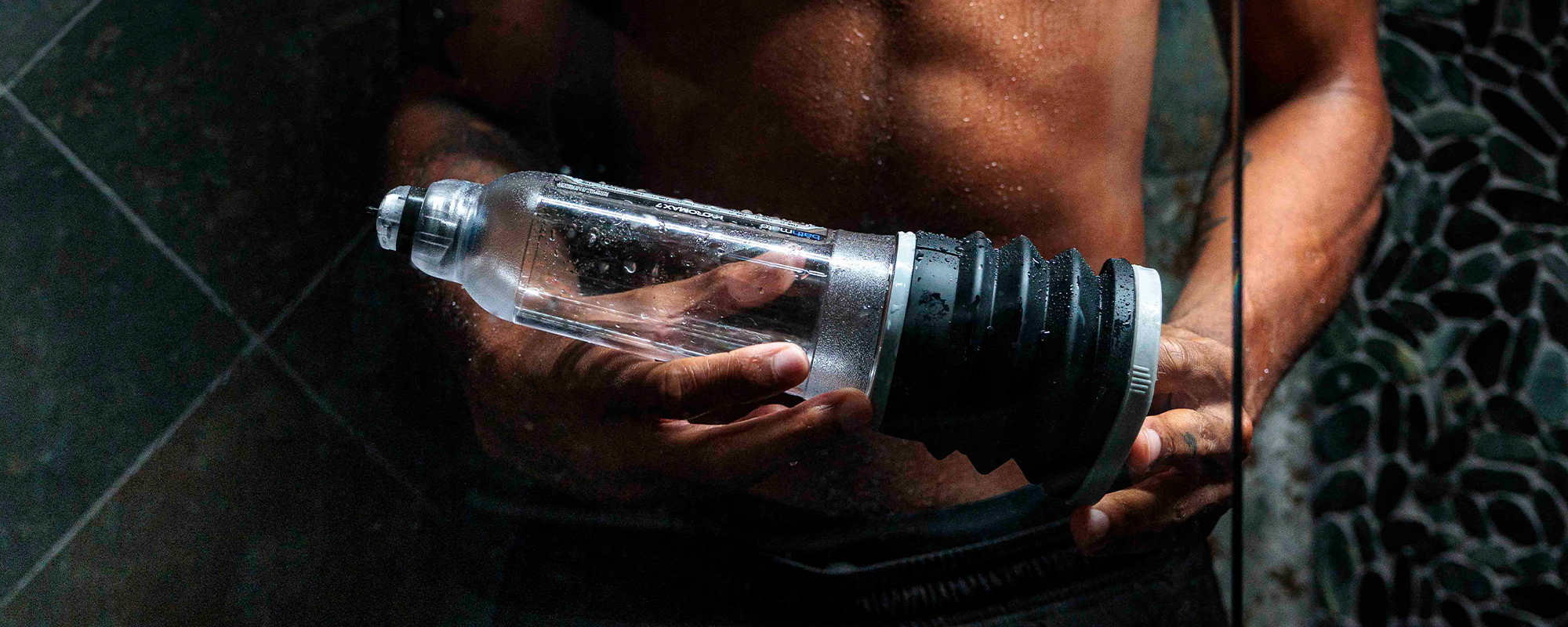
One of the most effective ways to support fascial release in the penis is through warm water therapy combined with gentle, consistent pressure. That’s exactly what the Bathmate hydropump is designed for.
When used in a warm bath or shower, Bathmate surrounds the penis in heat and pressure, both of which are proven to support fascial relaxation. The warm water helps soften the connective tissue, while the gentle vacuum of the pump invites the erectile tissue to expand without requiring arousal.
This passive expansion is key. You're not forcing performance; you're encouraging your body to remember its capacity for fullness and flexibility. Over time, this process can help:
- Release fascial restriction
- Improve tissue elasticity
- Restore blood flow pathways
- Support the natural length and girth of your erection
Even just 10–15 minutes a few times a week can signal to your fascia: it’s safe to open, safe to expand, and safe to respond.
For best results, pair your Bathmate routine with breathwork and stillness. Focus on slow exhales. Let your pelvic floor soften. Feel the warmth and circulation return. It’s a recovery ritual that trains your nervous system and fascia to work in harmony.
A Sample Daily Fascia Routine for Sexual Vitality
Want a simple way to support your fascia daily? Try this routine, with each practice designed to support hydration, mobility, and fascial responsiveness in the pelvic and genital area:
Morning
- Drink 16 oz of water with a pinch of sea salt: Fascia is highly dependent on hydration to stay pliable and lubricated. The added minerals help with cellular absorption and electrolyte balance, which supports tissue health.
- 5 minutes of light mobility (hip circles, forward bends, spinal twists): Gentle movement in the morning wakes up your nervous system and brings circulation to your core and pelvis. This helps prevent the stiffness that builds from sleep and sets the tone for fluid movement all day.
Midday
- Take movement breaks if sitting for long periods — stand, walk, stretch: Prolonged sitting compresses the fascia around the perineum and hips. Intermittent movement prevents stiffness and encourages blood flow, reducing fascial tension and restriction.
Evening
- Warm bath with Epsom salts: Heat softens fascial tissue and enhances muscle relaxation. Epsom salts (magnesium sulfate) support muscle recovery, reduce inflammation, and promote a sense of calm.
- 10–15 minutes of Bathmate hydropump use: While the body is relaxed in warm water, the hydropump encourages passive expansion of the erectile tissue and surrounding fascia. It supports elasticity, oxygen delivery, and circulation without requiring stimulation.
- Deep breathing or pelvic awareness meditation: Breathwork lowers cortisol, promotes parasympathetic nervous system activation, and helps release subconscious tension held in the pelvic floor and fascia. It also trains the body to associate arousal with calm, not pressure.
Weekly
- 1–2 sessions of full-body stretching or yoga: These longer sessions help restore overall mobility, release tension in key fascial lines (especially hips and spine), and enhance nervous system flexibility.
- Foam rolling or massage around the hips, thighs, and lower back: Targeted myofascial release helps break up adhesions and restores glide in connective tissue. These areas are directly connected to pelvic health and can influence the responsiveness of erectile tissue.
Small, consistent practices can unlock big shifts in how your body feels, moves, and responds.
Unlock What’s Already Yours
Your body already knows how to open, expand, and respond. But sometimes, it needs help releasing what’s in the way.
When fascia is healthy, erections feel fuller. Sensation becomes clearer. Expansion happens more easily. And your confidence rises, not from forcing performance, but from trusting your body again.
Penis size isn’t always about what’s missing. Sometimes, it’s about what’s being held back.
Release the restriction, and you reveal what’s already there. Train gently. Move with intention. Give your body permission to open. And remember: expansion starts with space.
Let fascia become your next frontier in sexual vitality.



Hakima Tantrika
Learn MoreHakima Tantrika is a sex educator, intimacy coach, and copywriter who contributes regularly to Bathmate’s blog. Trained in classical Tantra, she helps individuals cultivate deeper self-awareness, authentic connection, and embodied confidence. On Substack, she leads an engaged community where she shares insights on sexuality, relationships, and personal growth, blending education with honest storytelling. Through her clear, thoughtful approach and distinctive voice, Hakima brings depth and integrity to modern conversations about intimacy, pleasure, and self-understanding.
Share:
CBD and Sex: Is It Worth the Hype?
How to Groom for Casual Hookups vs. Long-Term Lovers